
How to Write Awkward Scenes That Make Readers Wince
Short answer
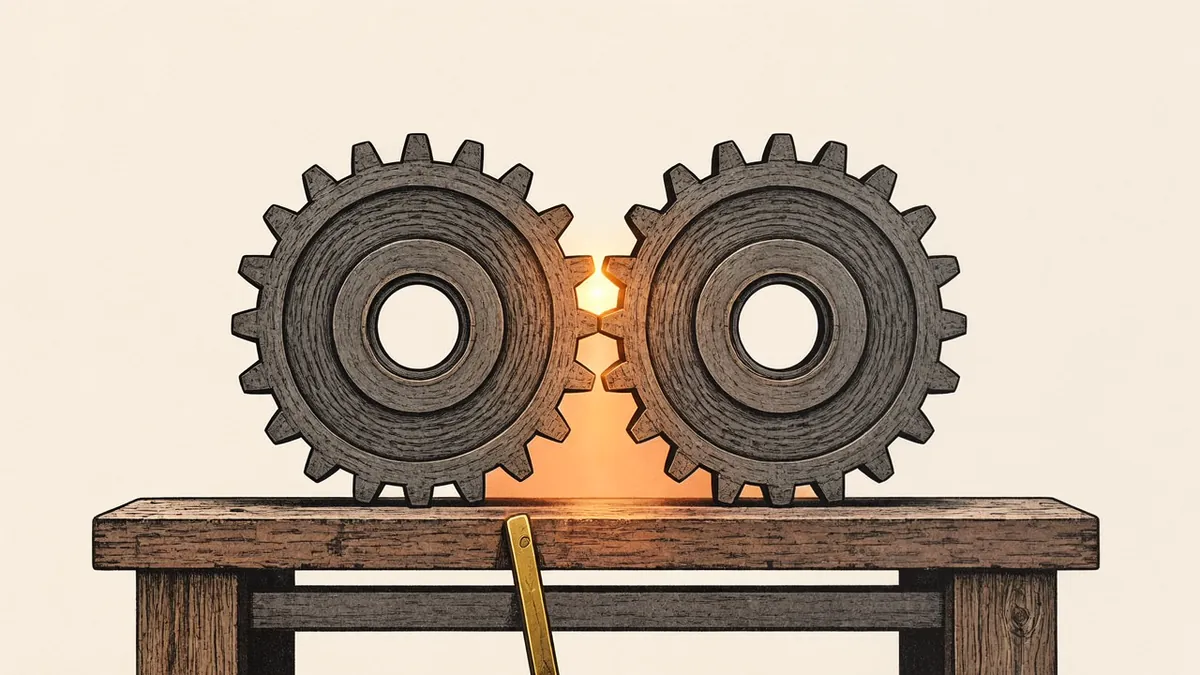
Build awkwardness from a gap: characters running mismatched social scripts, all aware, none fixing it. Show failed repairs in dialogue and bodies, then exit early.
A character mishears a name at a party. Everyone stands there a beat too long. And you type: "An awkward silence fell over the table."
Nothing landed. "Awkward" is a verdict, not an experience. Readers only wince when they watch the machinery of the moment grind against itself: the wrong reply, the hand that won't stop gesturing, the person laughing exactly two seconds late. If the word "awkward" appears anywhere in your draft, you have usually spent it instead of earning it.
The good news is that awkwardness is one of the most mechanical emotions in fiction. You can build it deliberately, part by part, and predictably get the cringe.
Awkwardness is a gap, not a mood
Strip away the feeling and look at the structure underneath every scene that makes you hide behind your own fingers. Three things are always true at once:
- Two people are running different scripts. One thinks this is a warm moment. The other thinks it is an intervention. Neither has realized they disagree.
- Everyone sees the mismatch. Nobody acknowledges it out loud.
- Repair attempts make it worse. Every move a character makes to smooth things over exposes the flaw from a new angle.
That third item is where writers lose the effect. They stage the mismatch but let a kind remark fix it in the next paragraph. Real awkwardness compounds. The apology lands wrong, so now there are two open wounds, and the second apology tries to close both at once.
Cringe is not a mood. It is arithmetic: everyone present can see the mistake, and no one is permitted to fix it.
Keep those three conditions on a sticky note. A scene qualifies as awkward only while all three hold. The moment one character says "okay, we're both being weird," the math collapses and relief washes the tension away.
Asymmetric awareness: decide who knows what
The single biggest lever is knowledge imbalance. Before drafting, answer this for every person in the scene: how badly does each one know it's going sideways?
Four configurations give you four completely different scenes:
| Who notices | What the reader feels |
|---|---|
| Protagonist knows, other character doesn't | Pure secondhand shame. The reader squirms for someone |
| Other character knows, protagonist doesn't | Dread and irony. The reader screams inwardly |
| Both know, nobody speaks | Pressure-cooker tension. Excellent for romance |
| Neither knows, reader does | Comedy. The reader alone holds the bomb |
Romance lives mostly in rows one and three, comedy in row four. The worst choice is also the laziest one: making everybody equally aware and equally mute produces static mush, because the reader has no particular vantage point and nothing to fear.
This is also why you should know each character's default damage response before the scene starts. Some people over-apologize. Some people narrate their own lives loudly. Some go silent and start stacking coasters. If you haven't decided which failure belongs to whom, the scene will read flat no matter how well you write the individual lines.
If your awkward moment is supposed to tip into attraction rather than disaster, the same mechanics apply but the stakes flip. We break down that side of it in our flirty dialogue guide; the awareness gaps and failed repairs covered above work for both registers.
Follow hands, eyes, and objects
When humans are embarrassed, their attention goes somewhere stupid and specific. They suddenly care enormously about the salt shaker. They describe the parking situation at a funeral. Their hands acquire jobs.
So the physical layer of your scene should be built from surveillance, not summary. Track, in order:
- Hands first. What are they holding, adjusting, hiding? Hands betray before faces do.
- Eyes second. Eye contact made too fast, held too long, or pointed at furniture. Where a character looks is a complete emotional report.
- Objects third. Food is gold in romance scenes because eating gives a character something to do that visibly delays the thing they should say. Fork raised, pause, chew, still hasn't answered.
Avoid the stock gestures: blushing, tucking hair behind ears, biting lips. Those have been flattened by use and now read as labels. Choose instead the motion that only this character would perform under pressure, such as refolding the same napkin until it becomes a stiff little square, or answering a question addressed to someone else.
Concrete physical detail follows the same logic everywhere in fiction. If you want side-by-side comparisons of abstract versus embodied prose, the worked pairs in our show, don't tell examples post transfer directly to awkward moments.
Dialogue built from failed repairs
In life, awkward conversations contain recoveries almost attempted. In fiction, that is your dialogue engine. Each line either damages or fails to heal, and the rhythm looks like this:
- An off-key opening, said with total confidence.
- A reply that quietly reveals the two speakers were having different conversations.
- An attempt to bridge, aimed at the wrong wound.
- A line spoken to a third party or an object because addressing the actual person has become impossible.
One caution: resist the urge to write pun-level bad dialogue. Characters in awkward scenes are trying hard to be competent. Their lines should be reasonable sentences that arrive at terrible times. The horror is in the timing, not the grammar.
Before and after: a short example
Here is a before, written the way most drafts handle it:
Dinner with Dex went awkwardly. Mara's mom kept asking him questions, and he gave weird answers. Mara wanted to sink through the floor.
And an after, using the same events:
Her mom asked what Dex did for work.
"Corporate synergy," he said, then heard himself. "Consulting. The word 'synergy' got stuck in my mouth around 2019 and never came out."
Her mom smiled at Mara. The smile had instructions in it.
"He's joking," Mara said. Dex hadn't been.
Her mom picked up the serving spoon and offered him potatoes that he clearly did not want. He took them. The pile on his plate grew past his comfort, and he watched it happen, unable to intervene, like a man watching weather approach.
Note what changed. The verdict words vanished. Awareness became asymmetric: Dex half-knows, Mom definitely knows, Mara knows most of all. Mom's repair attempt, offering unwanted potatoes, makes things worse. And the last image lets the reader feel trapped right along with him.
End the scene earlier than feels safe
Awkwardness decays fast on the page. Two exchanges of failed repair feel unbearable. Six feel padded, and the reader starts skimming, which is the opposite of squirming.
Get out while the temperature is still rising. Good exits include:
- Someone abruptly remembering an errand.
- A sentence addressed to no one, mumbled at the door.
- Cutting straight to the drive home, headlights passing, replaying it.
- Ending on the character who caused the mess, still cheerful and unaware.
Notice that none of these resolve anything. Resolution is for conflict. Awkward scenes just stop, the way elevator doors closing stops a conversation mid-word.
Test your scene with three questions
Run any suspect moment through these checks:
- Can I delete the word "awkward" and the meaning survive? If removing it removes the effect, the scene wasn't built yet.
- Does everyone's knowledge differ? Same awareness in every head means flat.
- Does anyone successfully fix anything? Yes is your red flag.
If a check fails, don't rewrite blind. Name which condition is missing, whether scripts, asymmetric awareness, or compounding repairs, and patch that one component. Because the emotion really is structural, a targeted fix usually transforms the whole scene.
Writers often know these defaults instinctively, then drift under deadline pressure and hand the same cringe to every cast member. Logging these defaults per character keeps the cringe in character instead of generic. Keeping them in your story bible alongside each character's voice notes means the way someone fails at small talk stays consistent from chapter three to chapter twenty. WriteWithPaige lets you record those notes with each character profile, keeping failure modes varied across a full manuscript.
Frequently asked questions
Can awkward scenes work in limited third person if I'm outside everyone's head?
Yes, but shift the weight onto observable detail. In limited third you have access to one character's inner flinch, so let the interiority carry the discomfort and keep the other characters readable purely through gesture and dialogue. Deeper points of view simply add more reports of internal panic to choose from.
Can I play an awkward moment for laughs without killing the tension?
Anchor the laugh to a character, not the situation. If the joke is that one specific person copes by rambling or deadpanning, the comedy comes from character while the underlying discomfort stays intact. Humor that mocks the situation itself tends to release pressure you might want later.
Does an awkward scene belong at the end of a chapter?
It can, and unfinished discomfort is a strong hook, but save it for moments with real consequences rather than trivial ones. Closing on a lingering handshake reads as tease. Closing on a misread confession reads as momentum. Match the weight of the cringe to what you want the reader carrying forward.
How do I keep a series of awkward scenes from exhausting the reader?
Vary the configuration, not just the content. Alternate between who notices, who suffers, and whether the scene edges toward comedy or dread, so each instance feels mechanically different. Two identical setups within a few chapters dull the reflex; two differently built ones train the reader to trust your timing.
Want Paige to try these techniques on your story?
Start writing freeRelated reading
I Could Cut This Whole Scene and Lose Nothing
Your beta says your love scene is skimmable. The fix is structural, not steamier prose: want, resistance, complication, cost. A craft breakdown with a worked example.
Readers Skimmed Your First Kiss, So Here Is What Went Wrong
Beta readers flip past your kiss scenes but can't explain why. The usual culprits are sequencing and missing interiority, not weak vocabulary. A diagnostic, plus drills.
How to Write Fiction in a Second Language: Four Workflows
A practical workflow for ESL fiction writers: plan in your strongest language, draft ugly, then layer your revisions so fluency lands where it counts.
Worldbuilding Questionnaire You Can Finish in 20 Minutes
Ten questions, three timed rounds, zero hundred-page lore documents. A worldbuilding sprint built for writers who'd rather draft than fill out forms.